The Blind Spot: How Invisible Data Drift Silently derails Revenue Growth
- Melissa Zachary

- Jun 8
- 2 min read
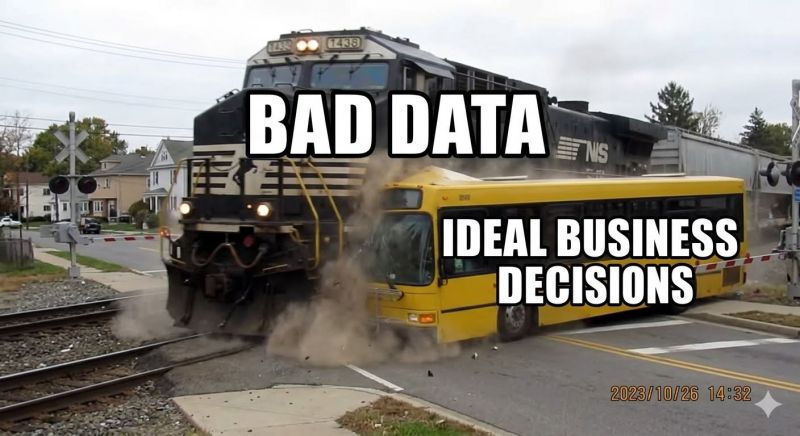
Imagine driving down a busy highway at night with a fuel gauge that’s permanently stuck on half-full. You feel confident, the engine sounds fine, and your dashboard says everything is under control—until the car suddenly sputters and grinds to a halt in the middle of nowhere.
In the corporate world, this happens every day. Executives make major, high-stakes decisions with absolute confidence, unaware that their underlying data infrastructure has slowly and silently drifted out of alignment.
When your reporting pipelines are fractured, the true cost isn’t just an IT headache. It is an immediate, direct threat to your revenue growth strategy. Here is how bad data secretly steers healthy companies off course.
1. The Phantom Opportunity Cost
When data is siloed across different operational tools, it creates conflicting versions of reality. If your marketing CRM shows an influx of high-value enterprise leads, but your sales pipeline tool isn't matching those accounts accurately due to a broken API connection, your leadership might pull funding from a highly profitable channel. Bad data causes companies to double down on underperforming initiatives while starving the real growth engines.
2. The Danger of Aggregated Averages
Executives naturally rely on high-level dashboard summaries to steer the ship. But averages lie. If your overall profit margin looks steady at a healthy 18%, that aggregated number might be masking a massive problem: one product line might be booming at a 35% margin, while a legacy service line has quietly cratered to a negative 5% margin due to rising operational costs. Without automated KPI frameworks that actively flag these micro-trends and outliers, critical structural issues remain invisible until they hit the quarterly balance sheet.
3. The "Analysis Paralysis" Tax
When leadership realizes, even subconsciously, that the weekly reports cannot be entirely trusted, decision-making stalls. Meetings that should be spent on growth strategy devolve into two-hour arguments over whose spreadsheet has the correct numbers. This lack of data integrity introduces an organizational friction that destroys market agility. While your team is busy cross-referencing CSV files to verify basic metrics, your competitors are executing.
Shifting from Reaction to Assurance
Plugging revenue leaks caused by bad data doesn’t require a total system replacement. It requires shifting from a reactive "clean up the mess later" mindset to a proactive architecture:
Automated Data Validation: Building automated gatekeepers that scan data as it flows between systems, instantly flagging anomalies (like a sudden 20% drop in logged revenue) before it reaches an executive slide deck.
Unified Metrics Definitions: Establishing a hardcoded, single source of truth for core business drivers so "Active Customer" means the exact same thing to sales, engineering, and finance.
Proactive KPI Alerting: Moving away from passive dashboards and toward active alert frameworks that ping stakeholders the exact hour a metric breaches acceptable operational guardrails.
Data integrity is not an IT luxury; it is the foundational infrastructure of predictable revenue growth.



Comments